Flash Fiction vs. Short Stories: A Beginner's Guide to Choosing Your Form

A man finds a letter in his dead father's coat. That's all you have so far: one image, a small pressure of tension, a question you want answered. Before you type a word, you have a decision to make, and it isn't about ambition or word count targets. It's about how much room the moment deserves.
Choose badly and the story either sprints past the thing you wanted to linger on, or it wanders for four pages looking for a plot. Flash fiction and the traditional short story aren't the same animal at different sizes. They ask different questions of a writer, and they reward different instincts. Here's how to tell which one your idea is asking for.
Most people assume flash fiction is simply a short story that got cut. It isn't. A flash piece is usually built around a single moment, a single turn, or a single voice. Something shifts, and the story ends before the dust settles. You are writing the hinge, not the door.
A short story has room to show the door, the hinge, and the room it opens into. That means at least one full scene, usually two or three, and enough space for a character to change in a way the reader can watch happening. Roughly speaking, flash runs from a sentence up to about a thousand words, while short stories tend to sit between roughly 1,500 and 7,500 words. Publishers set their own limits, so treat those numbers as neighbourhoods rather than borders, and always read the submission guidelines before you send anything out.
Useful working ranges, if you need somewhere to start:
What matters is not hitting a number but noticing what your draft is doing. If you find yourself adding a second scene to explain the first, you are probably writing a short story in a flash costume.
Flash moves fast, and it has no room for throat-clearing. Every sentence has to do at least two jobs: carry information and carry pressure. If a detail doesn't advance the tension or deepen the voice, it goes. This is why flash writers lean so hard on implication. You mention the coat is still hanging by the door, three months after the funeral, and the reader does the rest of the work.
A short story can afford to slow down. It can spend a paragraph on the kitchen, the smell of the radiator, the way the mother-in-law stacks plates. Those details accumulate into texture, and texture is where the emotional weight of a longer piece lives. The risk is different, too. Flash fails by being opaque or gimmicky. Short stories fail by drifting, by spending a page and a half on a scene that only needed two sentences.
Read your draft aloud. In flash, a line that makes you pause to admire the language is usually a line worth cutting. In a short story, that same line might be exactly what keeps a reader in the room.
Most flash begins after the inciting incident has already happened. The man has already found the letter. We don't need the search through the coat pockets, the phone call to the sister, the drive over. Open on the letter in his hands and the story has somewhere to go. Flash often ends at or just before the moment of realisation, and it doesn't need to resolve anything. A click is enough.
A short story needs an arc, and that means connective tissue: setup, complication, crisis, change. Your reader wants to understand why this man is the way he is, what he stands to lose, and what it costs him to keep going. You can't supply that in three hundred words without it feeling like a summary. You need scenes, and scenes take space.
A helpful diagnostic: count the scenes your idea genuinely requires. One scene, or one scene plus a fragment of memory? That's flash. Three or more, with a character who has to make a decision you want the reader to feel? That's a short story, and trying to compress it will flatten it.
Every choice costs you something. Being clear-eyed about the trade helps.
Notice which of these losses makes you flinch. If the thought of not explaining your character's past feels like being gagged, write the short story. If you're itching to cut straight to the image, write the flash.
When you're stuck between the two, ask yourself:
The fastest way to understand the difference is to feel it in your hands. Take that letter in the coat and write it twice: once as a flash piece of around 400 words, once as a short story of 1,500. Don't expand the flash by padding. Rebuild it from the ground up, adding the scenes the longer form needs.
Then read both aloud, side by side. Ask which one feels complete rather than which one feels long. Most writers discover that one version has a pulse the other doesn't, and that pulse tells you what kind of writer this idea wanted.
Keep both drafts. Submit the one that works, and put the other in a folder for later. Plenty of good flash pieces turn out to be the opening scene of a short story that hasn't been written yet, and plenty of bloated short stories are really flash pieces waiting for someone brave enough to cut the first two pages. Choose the form that lets the moment do its job, then get out of its way.
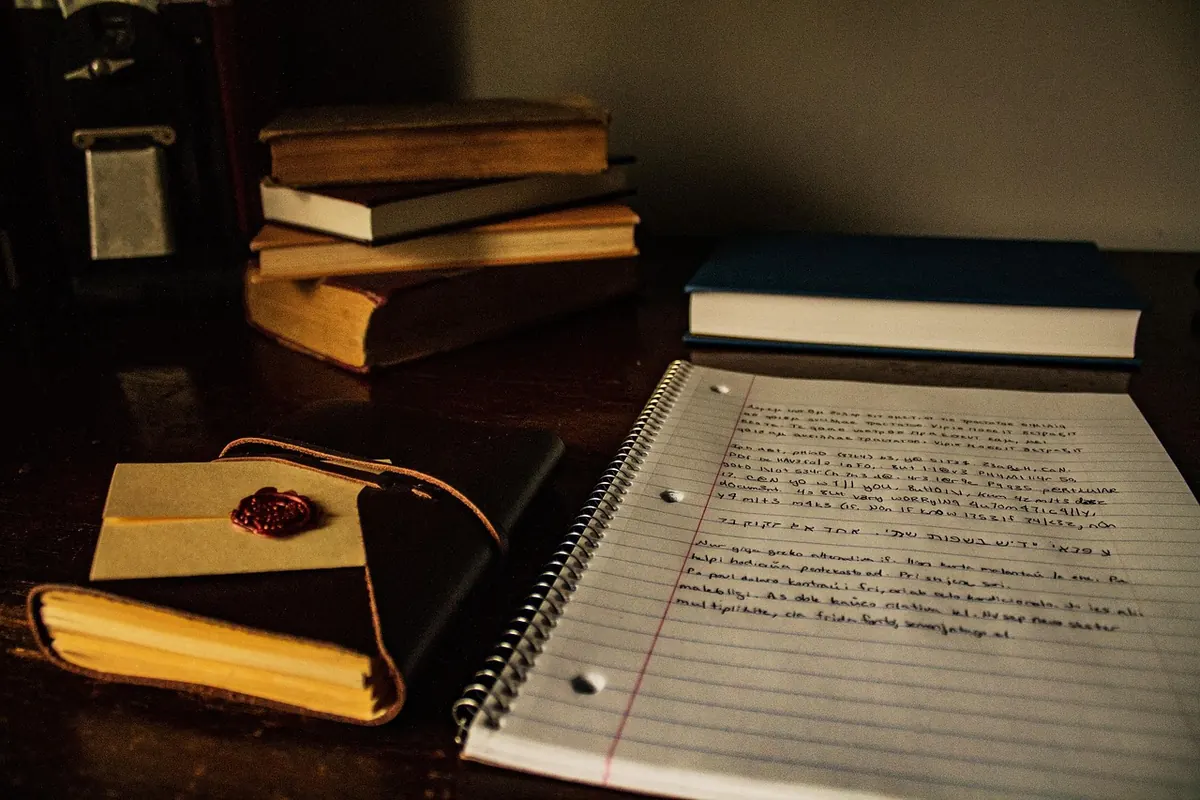
Photo: Negative Space / Pexels